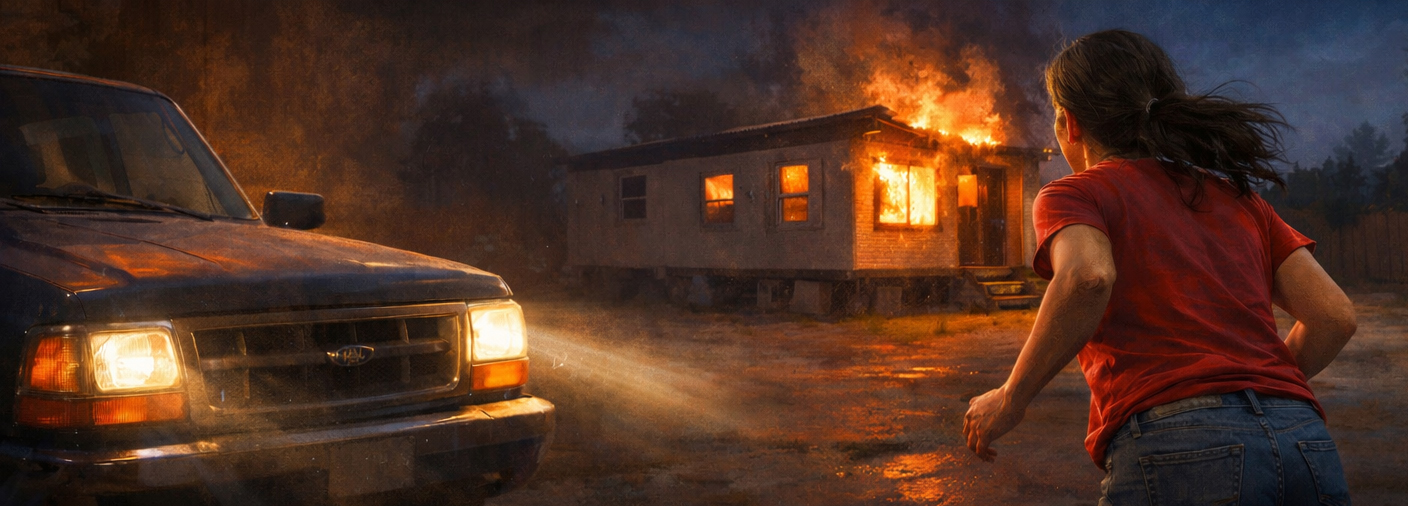
“I have always been the weird girl, but their opinions must not touch Dad’s business. Somehow, I need to figure out what’s really going on.”
Nia Perez
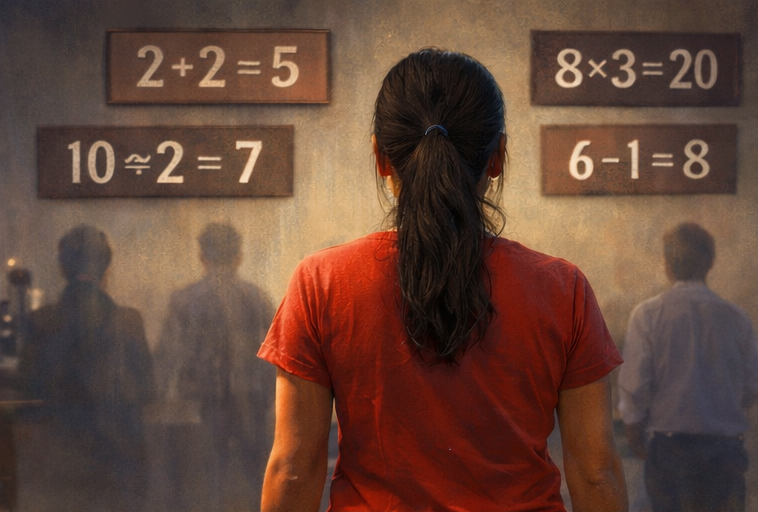
“That night I keep having the same weird dream. I’m showing a mobile home to a family of faceless customers, while trying to remember the finer points of the pitch. But I keep getting distracted by those stupid word-art plaques. They are everywhere. On every wall. Instead of inspirational words, though, math equations with incorrect answers. One reads 682 x 48 = 59. I can’t get distracted. I need to tell the buyers about the farm-style sink, and the soft-close cabinets. And the shiplap. I am always forgetting to mention shiplap.”
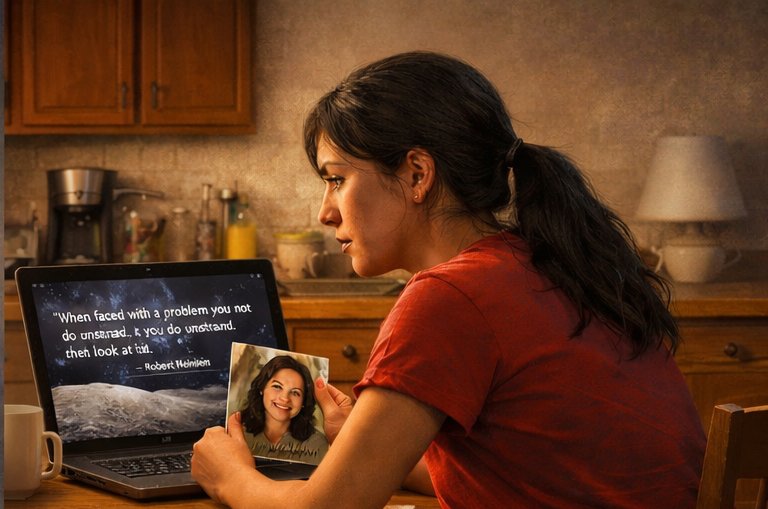
Cardboard Dollhouses was the first story that I wrote for this collection. Story may not be accurate. At nearly 17,000 words it has grown into a novella.
One of my biggest challenges was the narrator, Antonia “Nia” Perez. Lost in a mind filled with numbers and patterns, she is not very observant about the real world. She doesn’t always reveal what she’s thinking. She keeps her feelings close. While I certainly do not share her brilliance, I understand her personality quite well. I know how it feels to be the “different” girl.
The second challenge was Nia’s friendship with Ben Russell. Ben and Nia are fundamentally different people, different worldviews. They know it, and they carefully maintain certain boundaries. And yet they care deeply about the other, even if they spend a lot of time quarreling. Nia’s friends don’t understand the friendship. They come from different worlds. Nia’s dad sells mobile homes. Ben is a Russell, a child of privilege.
But is Ben Russell a murderer? Can Nia focus her mind on the real world long enough to figure out what’s really going on?
Within the group of girls at the heart of these stories—the Fearless Nerds—I wanted to include some of the groups that have built Florida. Nia is descended from the Minorcans, who came to Florida as indentured servants in 1768. Having spent a lot of time in St. Augustine as a child, I was well aware of their contributions to our state. I detest how they have sometimes been portrayed, such as in Pat Frank’s novel Alas Babylon. My own family’s genetics show that our ancestors include early settlers to Northeast Florida. Because the DNA also shows some links to the Iberian Peninsula or Sardinia, I thought it was possible that I have at least one Minorcan ancestor. I certainly have ancestors that came to The New World as indentured servants, which is common enough for those of us with ancestors that arrived prior to The Revolution. Whatever the truth, I’m fairly sure that it has been lost to history.